Showing posts with label writing. Show all posts

Monday, August 9, 2021

Save the Cat! Writes for TV Blog Tour #screenwriting

 If you're interested in writing TV scripts, then this is a fascinating, step-by-step approach to doing just that.

 Dubbed "The Last Book on Creating Binge-Worthy Content You'll Ever Need," Save the Cat! Writes for TV  by screenwriter Jamie Nash is based on the noted Blake Snyder Save the Cat! writing principles to offer a step-by-step approach for writers at any level.

 Steps include: 
* How to write and structure a compelling TV pilot.
* All the nuances, tricks, and techniques of pilot-writing: the Opening Pitch, the Guided Tour, the Whiff of Change, and more* -The 8 Save the Cat! TV Franchise Types that will improve your story and your pitch
 * The not-so-secret TV Pitch Template that turns your TV series into the necessary read-over-lunch industry document
* A how-to in creating layered characters who are driven by complex internal struggles
* Study "Beat sheets" of the pilots of shows like Barry, Ozark, Grey's Anatomy, The Marvelous Mrs. Maisel, What We Do in the Shadows, Black-ish, The Mandalorian, This Is Us, Law and Order: SVU and more.

Review: This is an interesting study in screenwriting for those (like me!) who haven't tried it and wanted to get a taste of that style of writing. Easy to follow chapters and steps allow even the novice to feel they can try their hand at scriptwriting and get decent results. Note: Book was supplied by publisher. 

Create your binge-worthy TV series with Save the Cat! Writes for TV.
Read more about this book on Amazon:
https://www.amazon.com/Save-Cat-Writes-TV-Binge-Worthy/dp/0984157697


Thursday, April 23, 2020

#A to Z Blogging: T - U - Thinking About the SUbplots


* Go to Day 1 

The hardest thing as a writer is figuring out a story, doing an outline and then as you write finding you don't have enough story. That's where the subplots come in.

The subplots are those things that make your character more realistic, their life's struggles, their background, the other things they encounter in life - and the problems that have an impact on the plot. The rule is if it doesn't move the plot forward, then chuck it.

Everything should somehow play into the character's main goal and how they approach that. It could be a potential or faltering romance; a job or career; a hobby, even a pet. Like real life, all those things have an effect on what we do and how we do things.

The same goes for your character if they're to be believable and real. They have goals, aspirations, fears, friends, etc.  All of that makes them more rounded and comes out often in the subplot and the story.


Tuesday, September 4, 2018

Tuesday's Writing Tip

A new short post I'll be adding as I think of things.

No surprise to anyone that Amazon is glutted with books. Everyone, it seems, has a story they want to tell. I'll be honest - some shouldn't. At least not right away.

Today's Tip:

I learned a great tip a while back from one of my good author friends which I still keep in mind - cut the was's. 

What does that mean?

Simple. Be active, not passive. 

Too many times I look at the beginning of a book on Amazon and I'll see not one, but several was's and were's in the first paragraph alone. The first page - and the book - is filled with them.

This is a  simple example, but you'll get the idea:

Example: Sarah was tired. Her body was weighted down from lack of sleep.

Revision: Sarah dragged her body out of bed, her eyes at half-mast. Her arms felt heavy, like she'd lifted weights all night instead of sleeping. 

See the difference?

Start with action. It's not saying you can't use was once-in-a-while. Yes, you can use it. I have, but the key is - don't overdo it. Keep your main sentences and beginning active, not passive. Use it sparingly.  (The same goes for ly adverbs. There are better, and stronger, word choices.) 

The book/story is only only better and tighter by making it active, but it's more immediate.  It draws the reader into the action. 


 Interesting thing is that some readers were surprised that I started my book, Lizzie Borden, Zombie Hunter like I did, but the focus was the crime, so I had to put Lizzie right in the middle of the action. Why would I wait? The top quotes in each chapter are taken from inquest records and newspapers of the time.

Here's how I started it and part of the first chapter:

Chapter One


Q. You saw his face covered with blood?
A. Yes, sir.
Q. Did you see his eyeball hanging out?
A. No, sir.
Q. Did you see the gashes where his face was laid open?
A. No, sir.
—Lizzie Borden at inquest, August 9-11, 1892

 August 4, 1892

 Lizzie Borden drained the rest of her tea, set down her cup, and listened to the sound of furniture moving upstairs. My, my, for only ten o’clock in the morning my stepmother is certainly energetic. Housecleaning, already?
   THUMP.
   For a moment, Lizzie forgot her plans to go shopping downtown. THUMP. There it went again. It sounded like her stepmother was rearranging the whole room. She paused at the bottom stair, her concern growing, when she heard another thump and then, the oddest of sounds—a moan. Uh-oh. What was that? Did she hurt herself?
   “Mrs. Borden?” Lizzie called. “Are you all right?”
   No answer.
   She wondered if her stepmother had taken ill, yet the shuffling, moving, and other unusual noises continued. Lizzie hurried up the stairs and paused outside the partially opened door. The strange moans coming from the room sent a shiver up her back.
   When she pushed the door open wider, all she could do was stare. Mrs. Abby Durfee Borden stood in front of the bureau mirror clawing at her reflected image. And what a horrid image it was! The sixty-seven-year-old woman’s hair looked like it had never been combed and stuck out like porcupine quills. Her usually spotless housedress appeared wrinkled and torn. Yet, that wasn’t the worst. Dark red spots—blood, Lizzie’s mind whispered—dotted the floor and streaked the sides, of the older woman’s dress and sleeves. 
   Lizzie gazed about the room in alarm. The tips of Father’s slippers peeking out from beneath the bed also glistened with the same viscous red liquid. All that blood! What happened here? What happened?
   She gasped, which got the attention of Mrs. Borden, who jerked her head and growled. Lizzie choked back a cry of alarm. Abby’s square, plain face now appeared twisted and ashen gray. Her eyes, once bright with interest, stared from under a milky covering as if she had cataracts. She resembled a female version of The Portrait of Dorian Gray. Another growl and a moan, and the older woman lunged, arms rigid, her stubby hands held out like claws.
   “Mrs. Borden, Abby!” Lizzie yelled and stumbled backward as fast as she could. “Abby, do you hear me?”
   Her stepmother shuffled forward, her steps slow but steady. She showed no emotion or sense of recognition. The only utterances she made were those strange low moans.
   Lizzie moved back even further, trying to keep out of reach of Mrs. Borden’s grasping fingers. Then her foot hit something. Lizzie quickly glanced down at the silver hairbrush that had fallen to the floor. Too late, she realized her error.
   “No!” Lizzie shivered at the feel of her stepmother’s clammy, cold hand around her wrist. “Abby, what happened? What’s wrong with you?”


Monday, February 12, 2018

Writing and Planning


(photo: pixabay.com)

While sometimes words flow magically, most times it takes planning to get  a project done.

There's the plotter vs. pantser theory,  meaning do you do a full plot or "wing it," though most of us use some kind of outline. And often publishers require a synopsis, which requires you to fully outline the book, beginning to end. 

You can waste a lot of time and energy just "free writing" if you don't have the story outlined or at least the main points outlined. Most times, your subconscious, your muse, or your brain, wherever those ideas come from, fills in the extras as you go along.

Of course, outlines aren't written in stone. Things change or you get a better idea as your'e writing. I've had some ideas for parts I'm stumped on or not happy with come in dreams. I really like when that happens!

Alternate Planning Ideas

Sometimes, though, you get stuck and the story won't do what you want or leads you in another direction. For a fun, crafty idea, I really like this photo-picture-theme Story Board Idea shared by Christina Freeburn on the Killer Hobbies blog. It has photos and a few lines synopsis. That's a fun way to cement your idea and indulge your creative-crafty side, too! The bonus is you can use it for an interesting  promo, too! I might work on something like that for Lizzie Borden, Zombie Hunter (and #2... which is getting close to the end!) Here's one idea I had. Next time I'll make one with more photos:


I know others, like fellow writer and USA Today Bestselling author Jean Rabe, do super-detailed pages-long outlines of the whole book, based on her experience working with the big publishers who require every detail and chapter outlined. Hers are almost like writing the book itself. I've seen one, it's so detailed, it's almost scary! But when she starts writing, it's her "bible." It's all there - except, of course, for those little things you change along the way that just work better... 


Oh, and psst - She has a fantastic mystery-thriller coming out soon set in Italy! Love the title - The Bone Shroud....  Check out the amazing cover and more about it at her website! Wait'll you see that! 

* What's your favorite writing or planning ideas? 


Monday, November 13, 2017

Writing & Miniatures

It's MONDAY! 

Here's a little chuckle for you; this is too good not to re-post. ha!


A short post today. 

Slacked off on Nano - will get back to it this week. I promise!

I was sidelined by going to the annual miniatures show. And of course I got another small project to do, too!  

The two do coincide for me. In both, I flit from project to project until I get fully enthusiastic and really get into it. 

I'm going to be scheduling some other book posts while I concentrate on my own writing so you'll have some new stuff to read. Stay tuned!


Wednesday, November 1, 2017

Do You Nano?


It's Yes, November! In writer's parlance, that means it's NanoWriMo time?

What is that? Well, it's a kick start or kick-in-the-pants kind of thing, a chance to write 50,000 words in 30 days.

I tried it once. Didn't stick to it. 

I thought about it and realize, well, this year, I may do it. 

I've been outlining most of Lizzie Borden, Zombie Hunter 2. Toying with it. Deciding: do I or don't I write it? 

Yes, I've started it. Got a good portion done that I like though I'll likely change one plot line that is somewhat similar to the first book, Lizzie Borden, Zombie Hunter.  So... still thinking on that, but I can toy with it as I go along.

The main thing is now that I got over being sick this past couple weeks and actually having some time off not writing, I decided I'm going to try doing this. Nano will give me the framework to at least push through and get most of this done. Otherwise I may just keep procrastinating or talking myself out of it.

I'm not a fast writer, but I've figured out word counts to know how much I should try to get done in a week. I don't believe in writing sloppy. Filling pages to fill pages is a time-waster. But I know I can write enough to put in some quality words. I'm really interested to see that I can actually get a good working copy done in the time period given - or at least close to it. This will be a test for myself.

I've outlined a good portion of it, and some I know will come as I go along. Hoping that I don't find that black hole but once I start, I have to finish it. So, that's my idea and the goal. (Oh, and I found this cool Brainstormer Worksheet if you - or I - do get stuck.)

Anyone else doing Nano? Friend me - chrisv07

Let's all cheer each other on. 


Monday, October 9, 2017

Monday Updates! #Horror #Writing #zombies

It's Monday! So it's update time. What else to do today, right?

What's New or Coming Up?


* I have a new story, "Thirteen Horses," in the Descent Into Darkness anthology. Stories, novellas and more! You can also get it in paperback, 700+ pages! 


* Yay! Got a new review on Lizzie Borden, Zombie Hunter. 4 stars. I have a ways to go to 50 so feel free to add yours! 
** Check out the new 2nd edition and new cover at the link!


* The October Frights Blog Hop starts Tuesday to Sunday. Prizes, spooky fiction and more! Come back to the blog here for all the links and info.


* Saturday: 6-9 p.m.: Halloween fun! Come see the new Monsters! show and get a signed book Saturday at the Left of the Lake Gallery, 4615 7th Ave., Kenosha, WI.

** Almost done with my weird, horror news-fiction story I've been working on.  Only a few edits to go. So far it's called "The Story of the Century." Stay tuned for details! 

Interesting tid-bit: 

Bet you didn't know.... The days and dates in August 1950 are the same as in August 2017! (I didn't know either until I looked it up.)

 * Feel free to share what you are working on!! 

Tuesday, October 3, 2017

The Kings in Milwaukee part 2 #writing #horror


By Christine Verstraete

This is part two on Saturday's event in Milwaukee featuring Stephen King and his son, Owen King, who are touring to promote their newly released collaboration,  Sleeping Beauties.  * Read the first part of the story and some of their comments here.

(Photo: Justin Hamelin)


Sleeping Beauties is a huge 700+ word book. The premise is that women all over the world are disappearing, going to sleep, shrouded in a cocoon.

Here are some of their comments on writing:

How they became writers:

Owen King: "As a kid, we had books all over the house. Both my parents were writers, so I had the idea it was easy to be a writer. (Laughter in crowd.) We could read whatever we wanted. My childhood job was I read books for him (his father).  I started at 7 or 8, and the fist book I read was The Watchers by Dean Koontz. (It was) part of my big education as a writer."


(Photo: Dawn Napier)

What to do to become a writer?

Stephen King: "Read all the time. My mother was a single mom, we didn't have a TV for a long time." His mother was reading paperbacks, so early on, "I got to meet Miss Marple."

"When I was very young, I wanted to read Dr. Jekyll and Mr. Hyde, so she read it to me." When it came to the part about hearing "the bones snapping," I said, 'I want that."

So, what are they reading now?

OK: "Get Shorty  (Elmore Leonard)."

SK: "Y is for Yesterday by Sue Grafton (Kinsey Millhone series #25)"

Their favorite books?

SK: "Great Expectations."

On writing:

OK: "I think I learned a lot of writing lessons from my father over the years. It's scary and inspiring to be part of a collaboration. You constantly feel you have to raise your level. If the story runs into a bit of a narrative roadblock, he always has a solution for it that feels organic. That wizardry is not something you can teach."

What's coming up:

SK: An adaptation of the story, 1922, from Full Dark, No Stars, airs next month on Netflix: "I like what they did with it, frankly."


SK: A new book, The Outsider, comes out next June. "I like this one a lot. It's one of those stories I don't want to say a lot. Even the opening is a spoiler. "

On collaborating with his wife, author Tabitha King:

SK: "I would love to collaborate with my wife. ... Marriage is a collaboration. We've been married like 45 years. She tells me what to do and I do it."

Would father and son collaborate again?

OK: "We might. We had a great experience. I think people are always disappointed (to hear) how great it was. No drama." 

SK: Called writing with his son "a gift." See story, part one. 

 * Best way to judge a book: *  

SK: "... To my mind, the ultimate success or failure of a book can be decided on how it sounds when it's read aloud. It's like the extreme close-up in a movie almost. All the blemishes show. I can't listen to James Patterson without laughing wildly to myself." 

http://girlzombieauthors.blogspot.com

Monday, September 18, 2017

Writing #Horror Updates!

Yeah, writing sometimes is a horror. haa!

Just a quick update as to what I've been working on:

Short stories:


I have a cool story called "Thirteen Horses"  coming out soon in the Descent Into Darkness anthology... It's a twist on people getting just what they deserve.  Funny, as this story has been through a few rewrites. I seem to need several changes until I get it where it should be, but I like how it turned out... I'll have more details soon.
(Photo: pixabay.com)


* I've been working on a strange, creepy, horror news-fiction story. Hoping to send it to an anthology. The theme: worms. Yeah, yuck. Hope they take it. Stay tuned... 
(Photo: pixabay.com)


cverstraete.com

* If you haven't gotten it, I have a free Lizzie Borden, Zombie Hunter short story - The View From #7 French Street. Sign up and get it on Instafreebie. 

www.cverstraete.comBook: 

* The Haunting of Dr. Bowen, A Mystery in Lizzie Borden's Fall River
I had to update the print version slightly. A few missed punctuation marks and accents. No matter how hard you try something gets past you.... This is a nice little spooky story that won't take you long to read...  Some reviews will be coming soon... stay tuned.


Halloween fun!

* October Frights is Coming!! The annual fun blog hop with a bunch of us posting stories, excerpts, prizes and more - coming soon! You can join the Facebook page for updates, too.

More news and stuff is coming. So is Halloween, get ready!! 


Wednesday, May 24, 2017

Writing is Not for the Meek, #1LineWed

As I'm working on my latest project, The Haunting of Dr. Bowen, A Mystery in Lizzie Borden's Fall River, and looking at the latest set of notes/suggestions from another reader got me thinking - writing is not for the meek.

And since it's also #1LineWed - 1 Line Wednesday - here's a sample line from the upcoming Dr. Bowen story: (see more at website.)


"A dream. A bad dream, that's all it was. Just a dream." --Dr. Seabury Bowen

Now, back to writing.... you thought it was easy? haaaaa! Well, for me, nonfiction is easier since that's my background training and many years of newspaper writing. It doesn't mean it always goes smoothly, it's just my first experience.

Fiction is harder. If you are curious about the process, (well, for me), read on. Otherwise you might find this rather boring.

The saying is you write and then you rewrite and rewrite and... add about x times more. (I'm a serial re-reader and re-writer. So probably 20 times??) Very true.

I wrote the novella, revising as I go. Rereading quite a few times and revising some more. My writer's group got a short read of the very beginning. As it's short, two of the group read it and gave minor suggestions. Another fellow writer/editor read it - different suggestions.

Edited it. Edited it again.

Last reader/editor gave some other suggestions. Good ones, too, as they all see different things. Funny thing is how you can read something several times and you still don't see or miss certain things. But that's what pre-readers and beta readers are for.

So, I'll do some other changes, not major ones, which is good. Then it should be ready. Will I miss some things? Maybe. But it'll be the best I can make it right now. You simply do your best.

The main thing: others like the story. I like the story. And I think you will, too.

I really had fun with this one, melding the past and distant past, and adding different spooky elements and some mysteries to Lizzie Borden's hometown. And Lizzie also has an influence in this since, after all, the doctor was among the first on the scene of the Borden murders....

So stayed (See? That's why you have readers and editors. ha!) tuned for more details! I'll share the back cover copy and the cover soon!!


Monday, April 24, 2017

Lizzie Borden Writing News: #Horror #Zombies

An update on what's happening on the writing end of things:

* Dr. Bowen Novella Update:
  
  The Dr. Bowen novella, a supernatural-flavored mystery featuring the Borden family's neighbor and doctor is done! Well, almost. I'm editing now. Then I'll figure out what to do on the formatting and cover end of things. This is a short, 27,000 word book so I'm thinking of having it come out as a mini book size. I love the size of James Patterson's BookShots. Neat little books!

* Working on the back blurb (harder than the whole story!). And... have to figure out the title...  I have something in mind to test out with my writing group.

* Writing - Lizzie Borden, Zombie Hunter 2:

Once I finish editing, it's back to writing Lizzie Borden, Zombie Hunter 2. I took a look at it again after setting it aside, and the good thing is I still like what I wrote. ha! So, I'll be getting back to that with the goal of finishing it in the next few months I hope!

 * Audio Book Update:

Lizzie Borden, Zombie Hunter is in the audio book production stage. The hunt is on for a narrator and it'll go from there. Hope it goes fast!

* Other Potential News: Lizzie Borden, Zombie Hunter

There may be other news concerning the book, but I can't say yet until/when I get some confirmation on this. I don't want to say anything until I get word on whether it works out or not. So, you'll have to wait with me to find out! :)

* Coming Soon: A new Lizzie Borden zombie story!

   * * Yay! I also have a new short zombie story with Lizzie Borden almost done! Just tying up a few ends on it... Fun story and the neat thing is it has a little surprise twist in it. Stay tuned for details!!

Seeing all this written as one list makes me pretty excited that some good things are going on and will be coming soon! Sometimes you feel like nothing is going on or you're not getting anything done, but this makes me feel that I am moving forward! That's why lists are so great!! If you subscribe to my monthly newsletter (sign up here at my website!) this will all likely be repeated there, but good news is worth sharing more than once, don't you agree?

 ** About Lizzie Borden, Zombie Hunter:

Every family has its secrets…

One hot August morning in 1892, Lizzie Borden picked up an axe and murdered her father and stepmother. Newspapers claim she did it for the oldest of reasons: family conflicts, jealousy and greed. But what if her parents were already dead? What if Lizzie slaughtered them because they’d become zombies?

Thrust into a horrific world where the walking dead are part of a shocking conspiracy to infect not only Fall River, Massachusetts, but also the world beyond, Lizzie battles to protect her sister, Emma, and her hometown from nightmarish ghouls and the evil forces controlling them.


Tuesday, August 9, 2016

#Mystery Solved! Why Writers Write!


Today I offer something a bit different....
Mystery Author Donald J. Bingle offers some insight into the reasons...


Why Writers Write


Writers write for all sorts of reasons, but the general public always seems to want to create a simple dichotomy between writers who write for money and writers who write for the love of writing. Of course, then they generally sneer at the former and laugh at the latter.

As with most things, all is not as simple as it might appear to those who glibly gloss over subjects, rather than giving them any serious thought. Even with minimal thought (I like to think I'm efficient, not lazy), I've come up with a number of more subtle categorizations on the infinite 3D grid scale of why people write and thought I would pass them on for consideration.

People who love to write:

There are some people who simply need to write constantly and in quantity. They hurt if they don't write and may or may not care if what they write is any good or is ever read by anyone else. They may find joy in the process of writing or, if not joy, perhaps therapy ... or at least a calming of their OCD impulses to create content. While this can manifest in a workaholic obsession in professional writers, it is, I believe, more often seen in amateur writers, for whom the process is pleasurable or cathartic, or relaxing. Although professional wordsmiths may often match the word count of these lovers of writing, the professionals tend to match the lovers of writing word-for-word more out of work ethic, professional responsibility as to deadlines, and trying to make a go at a successful career as a full-time writer, than those who simply love to write.

Full-time pros also, I believe, spend more time editing and re-writing and definitely have more prolonged periods in which the writing is "work"—arduous, wearying, and draining--than lovers of writing, many of whom seem simply content with writing down what their characters "tell" them to write. In some cases, finishing a novel or story isn't really the point and someone who simply loves to write may have multiple unfinished projects and not be concerned at all about the lack of completion, perhaps because completing a project means the end of writing the project and they love writing the project too much to ever want to do that.

People who love to have written:

For these people, the process of writing isn't what is pleasurable, it's the accomplishment of having written that floats their boat. Whether simply goal-oriented, competitive about their word count, or simply desirous of announcing (and perhaps gloating over) their accomplishment, these people get pleasure out of having done something that the world values in some way (even if not monetarily), although the process of getting to that goal may have been a long, hard slog, perhaps even painful.

These are the type of people who, in another context, run marathons to say they have run a marathon, rather than having any particular joy in running itself. There may be importance in being able to say "I am a writer" or "I am an author" or "I wrote a novel." Page count (rather than the more professionally relevant and accurate word count yardstick) may be quite important, whether in total or over some arbitrary time period. Publication is not necessarily the point and such writers may have a trunk full of unpublished (even unpublishable) product. Someone who writes for "posterity" may be in this category or, if their ego is sufficiently large, they may be in one of the next categories.

People who love to have their writing read: 

For these people, writing and having written are just means to an end. The writing may be fun at times and an irksome slog at other times, and they don't mind the adulation they may receive from friends and colleagues for having written, but what they really care about is being read. They crave an audience. Some may be satisfied if a special someone reads their words. Others may be content to produce a family memoir or local organization newsletter. Others may need a broad public audience, but they want an audience of some kind. They may seek to impress or receive a pat on the back or they may seek to influence public opinion (frequent writers of letters to the editor often fall into this category) or a broader audience, but they want their words to have some kind of impact.

This may force such writers to be more concerned about the marketability or commercial quality of their writing as, at least traditionally, there have been gatekeepers who have some control over whether writing is actually read by the public--editors, agents, publishers and the like. These writers may also have various threshold goals that they believe help them ensure being read (submitting, perhaps, stories only to publications of a certain circulation or which pay "professional" rates, as these avenues are more likely to assure consistent readership).

People who want to be acknowledged/famous:

Closely related, perhaps, to the foregoing category, these people seek attention, fame, notoriety, and accolades, and they see writing as their steppingstone to achieve such goals. Although writing, having written, and being read may be interim steps toward such goals, the key to satisfaction is not necessarily found in any of those preliminary items, but only in the acknowledgment that stems from them. Let's face it, there are plenty of people who are known for being writers that not that many people actually read. And some of these authors are not bothered by their lack of readership, provided that they still receive the accolades and/or money associated with being an author.

People who write for money:

These people may or may not enjoy all or some of the process of writing, they care only about having written because it impacts the bottom line. They care only about being read to the same extent. For them, writing is a paycheck, a job. It may be a more pleasant job than digging ditches or working direct sales and they may be adept at it because of talent, practice, or study, but writing is simply a way to earn a living.

Copywriters, ghostwriters, technical editors, and the like may fall into this category (or those people may simply be doing such things to pay the bills while they pursue writing about which they have greater passion). Some--especially those who have never actually written much--may have pie-in-the-sky dreams about how much money can be made for little effort in the writing biz, while others see it simply as a serviceable job or a way to make a bit of extra money on the side without having to work a second full-time job. Of course, those with more grandiose dreams of writerly income may be severely disappointed, but that doesn't mean there aren't plenty of them out there--and they all have a screenplay they really want to show Steven Spielberg.

Writers don't fall on a simple x/y graph of love vs. money. I'm sure you may have an axis or two to add to the multidimensional graph this article suggests. If so, please let me know in the comments.

Me, I mostly write to be read. Sure, parts of the process can be fun and I like having written, but if it's never read or widely read, I feel unfulfilled. Money and fame would be nice, but I tamp down these feelings because they are unlikely outcomes.

I'd love it if you would like to read more of my writing. I'd love it even more if I know I've been read--whether via a private comment or a posted review or skyrocketing sales due to word of mouth. As always, you can find more about me and my writing, including Frame Shop, my murder mystery set in a writers' group, at www.donaldjbingle.com and can find my books and stories on Amazon, as well as on my website and other typical marketplaces.

  About Frame Shop: Critiquing Another Writer Can Be Murder


Frame Shop is a 42,000 word mystery/thriller set in a writers' group. Unlike a traditional who-dunnit, Frame Shop mixes violence, humor, and occasional writing advice in a format that will keep mystery lovers, aspiring authors NaNoWriMo participants, and established writers turning the pages.

​From its lurid, over-the-top prologue to its quirky addendum, Frame Shop delivers fun, intrigue, and variety to its readers, whether they are long-time mystery fans or aspiring writers attracted by its writers' group setting.


Harold J. Ackerman thinks his latest cat mystery proves he is the best writer in the Pleasant Meadows Writers’ Guild and Critiquing Society, not that the motley assortment of poets, poseurs, and wannabe writers in the PMWGCS provides much competition. But then Gantry Ellis, the NYT best-selling author of the Danger McAdams mystery thrillers, joins the group and wows everyone. Still, Harold hopes to leverage his connection to the famous author into a big break, agreeing to help his mentor with some crime research between contentious critique sessions. Soon, though, his efforts lead to murder ... and then more murder.

Monday, February 15, 2016

Two Writing Hats

Been pretty busy writing nonfiction these days so other things are on hold or at least I'm behind on them.

Will try to think up some new blogs this week.

There is a book circulating to publishers - still. Yes, it has zombies. Stay tuned...


Monday, January 4, 2016

#Mystery Authors Talk Writing in 2016

Since it's a new year, what better time to talk writing new stories and new ideas. But... what happens when those stories and ideas get kind of well, stuck, or just aren't working?

I asked a few of my fellow writer friends what they do when this happens. See what they have to say (and check out their latest works if you haven't!). Some good advice from some pros!


Margot Justes, author of the romantic suspense A Hotel in...  series, including the latest, A Hotel In Venice, had this to say about getting written into a corner:


"What usually works for me when I'm stuck and write myself into a corner, is to walk away, and work on another project," she says. "I usually work on two or three projects. I'm still mulling things over, but it seems to be less frustrating, and eventually I realize that all the arrows pointed in the right direction.

"I'm not a plotter, and I think that makes it a bit more difficult, but at the same time more enjoyable. I was shocked when I realized how A Hotel in Venice would end-had no clue who the murderer was going to be. So much frustrating fun, and the ending is terrific.

"I'm currently working on A Hotel in Barcelona, continuing with the series. I've grown to love the characters, and because I love to travel, the settings give me a great of pleasure, and of course I have to visit the places I write about. I'm also working on a novella set in Chicago that ties the hotel series-and is a sequel to A Fire Within-the characters have become a family to me."


Terrie Farley Moran is 
author of the Read 'Em and Eat Mysteries: Well Read, Then Dead and the latest,Caught Read-Handed, and the upcoming, Read to Death, as well as co-author of Parchment and Old Lace by Laura Childs with Terrie Farley Moran.  (See her latest short fiction "Inquiry and Assistance" in hte January Alfred Hitchcock Mystery Magazine.)

She is that author who takes the sometimes scary ride to getting a book written: 

"I am a pantser so I get stuck a lot, in the sense that much of the time I have no idea where the  story is going," she says, "That is, I may know how the story is going to end but I have no idea how I am going to get there. When ever that happens I go for a walk or a bike ride and 'talk' to the characters. Eventually the story comes together."

And when it's not working.... she has good advice.  "When I realize some part of a story doesn't work and a solution doesn't immediately come to mind, I write past it. When it is time to edit, I look at it again, either I fix it or delete it. I don't agonize. Quite often I find that if a part of a story doesn't work, it really doesn't belong."

What inspires her to go on (besides that editor breathing down her neck?)


"Ha-ha-ha. Inspiration? Writing is hard work and I sort of roll from one project to another. I have had extremely tight deadlines for the past few years. When I finish a project due this month (Crepe Factor by Laura Childs with Terrie Farley Moran) I have a slight hole in my schedule. When I realized that was happening the first thing I did was pull up the short story I abandoned when that first deadline hit three years ago. I can revisit and finish it right after this deadline. As an aside it is the only thing I ever started and didn't complete but deadlines for two other projects interfered and then new deadlines and, well, you know the drill."


Jean Rabe, multi-published author, including the latest - Pockets of Darkness about a thief of antiquities who also picks up a Sumerian demon  - (she actually has three latest novels in different genres) fittingly has her own method to keeping the non-writing monster at bay: 
"I don't usually have a problem with writer's block, or being 'stuck' on something with a novel-in-progress. I have two approaches to defeating tht monster:

"I switch to my other project, because I ALWAYS have at least one more project going...whether it is a short story or something I am tasked with editing. I figure if I can't work on my novel, I'll make sure I work on something. Then I'll go back to the novel the next day."

In other cases, she admits doing the thing writers would rather NOT do… “I do something I detest, like scrub the kitchen or bathroom floor. Hands and knees scrubbing, which gets a floor nice and clean, and which is onerous. Every minute I spend scrubbing, I tell myself I should be writing instead. So if I want to stop scrubbing, I go back to typing.

“I'm the sort who has to be doing "something." I've always had a problem with sitting still and doing nothing. A constant twitcher! That's it, I'm a twitcher, and so I might as well twitch away at the keyboard.”


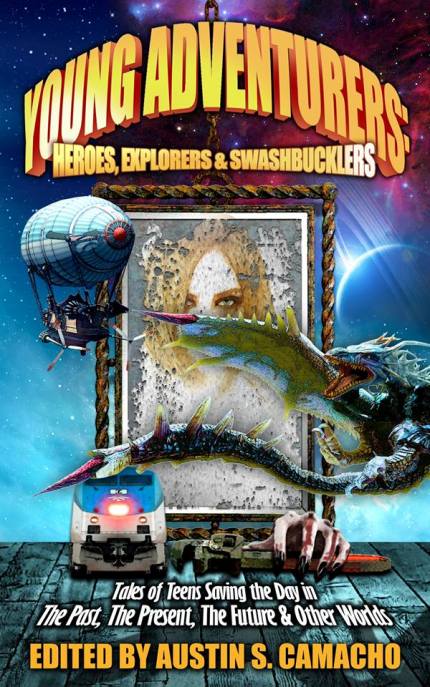
Christine Verstraete, author of Girl Z: My Life As A Teenage Zombie and her latest, a short mystery featuring her zombie girl character and some missing dogs, in Young Adventurers: Heroes, Explorers & Swashbucklers, says the real problem is not the writing. She writes all the time and has a number of projects in the works. 

"My problem is not getting stuck - I usually can get past that by keeping the writing going - but I skip to other projects too often. I have several projects in the works. My goal is now to finish those and get them out there this year. As the old saying goes, if not now, then when?"